
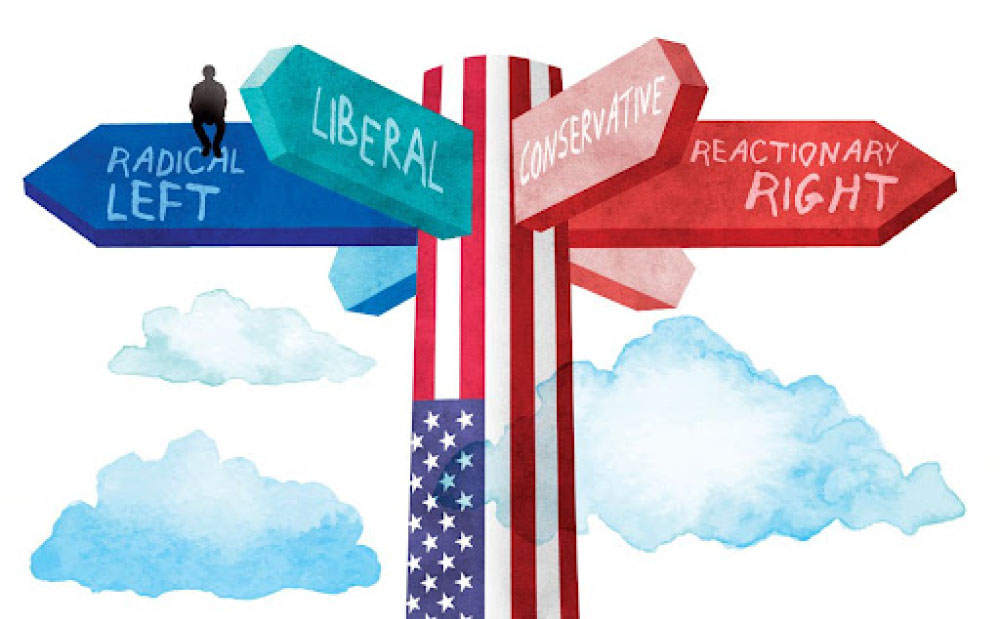
If you’re the type of person who thinks the people who oppose your political viewpoints are evil and secretly hate America, this blog is probably not for you. But if you are someone who is distressed by the divisions in our country, remember: regardless of where you stand politically, the enemy isn’t conservatism or liberalism – it’s extremism. Nobody thinks of themselves as an extremist, but a lot of people think of themselves as loyalists, and in the end, they are pretty much the same thing.
The majority of America is pretty moderate. Most Americans favor freedom over uniformity and are pretty liberal in terms of social policy. However, the majority of Americans have more conservative views when it comes to business policies and free enterprise. Americans reject socialism as a concept but believe everyone should have access to food, housing, education, and healthcare. Most of us are not that far apart.
Of course, that’s not what we see in the media. All we see are the extremes on both sides. The media learned a while back that bad news outsells good news and that viewership is higher for news programs that get us angry and all worked up. If politics makes you feel angry, keep this in mind: The wealthiest and most powerful Americans tend to be politically independent often make political donations to candidates from BOTH parties. Hmmm, why do you think that is? I’ll tell you why. Because they care about themselves more than they do any candidate or political party – and they understand how the game is played.
My point isn’t that politics don’t matter and there aren’t things worth fighting for. Politics matter plenty, but being a political loyalist if you’re not a politician yourself is pretty lame. Even loyalist politicians are known in Washington DC as “ideologues”, and are often dismissed as fanatics by the real power players. Unfortunately, the super-skill that the many successful journalists and politicians share is their ability to turn their followers from thinking constituents into non-thinking fanatics…Don’t be a non-thinking fanatic! If you detest politicians who divide us, that’s a good start. A well-informed, independent-thinking electorate is the last thing most politicians want. Extremism, in all forms, is the enemy.






Regardless of political persuasion, most people think the rhetoric of politics has gotten out of control. If you believe that, as I do, there IS something you can do about it. You can ask yourself whether you are helping or hurting the situation. I like to say that there are two types of people in the world: people who add stress and people who relieve stress. I think similarly, some people are adding to the political spectacle in the country, and others are at least trying for something better.
Gary's Blog will return next week.
This past week, the National Association of Realtors invited me to participate in a meeting with the NAR leadership and Jonathan Kanter, the Assistant Attorney General of the United States.