
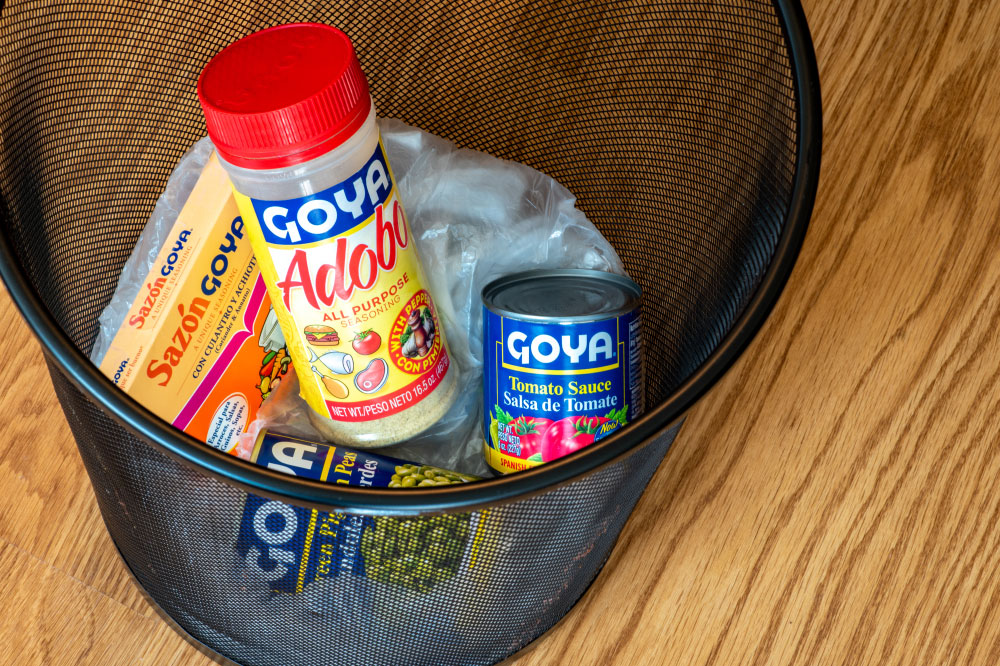
Freedom of speech is a bitch…On one hand, it is the cornerstone of the American system and almost everyone praises it – at least in concept. On the other hand, it can also be infuriating. Most of us love the idea of free speech when it serves our interests but hate it when it doesn’t. This week Robert Unanue, the CEO of Goya foods, one of the largest Hispanic-owned companies in the country, was invited to the White House to participate in a Rose Garden ceremony where the president signed an executive order to promote Hispanic prosperity. At the event, Unanue boldly praised President Trump for his economic policies. The response to his comments from Latinos and Trump critics was swift and harsh on social media. Food bloggers, politicians, celebrities, and ordinary people circulated the hashtags #Goyaway and #boycottGoya in thousands of posts. Defenders of Unanue, criticized the boycotters for suppressing free speech, and Unanue himself said he would not apologize for the comments. Like everything these days, political lines are being drawn and stones are being thrown, as the debate intensifies on Twitter and Facebook.
My take on the Goya situation may surprise some people. First, free speech means the government cannot suppress your speech. That’s it; it doesn’t mean more than that. With few exceptions, people can express their views, no matter how controversial without censorship or punishment from the government. So Unanue, has every right to express his gratitude to President Trump and there is nothing our government can do about it. However, free speech does not mean we all have to like it or listen to it. In fact, free speech also means that if I don’t like what Unanue said, I can boycott his company’s products and urge others to do the same. As maddening as that may seem to both sides of the argument, everyone is acting within their rights in this case.
In recent years, people on both sides politically have called for boycotts. Some conservatives called for a boycott of the NFL when athletes were kneeling during the national anthem, and urged people to skip the musical, Hamilton, when Vice President Pence was booed at a show in Manhattan. Liberals have called for boycotts of the fast food chain, Chick-fil-A for supporting anti-LGBTQ+ policies and almost any company that advertises on Fox News. Both sides do it no matter what they claim. As a Latino, I don’t like seeing Latinos bicker with other Latinos in a destructive manner. My guess is that Goya employs a lot of Hispanics so a boycott could cause Latinos to lose jobs and suffer economically. I don’t like that.
I don’t know, Robert Unanue, but my sense is that he is a pretty smart guy who had to know that he was taking a risk for his company, when he praised this particular president. BTW – I don’t think this was purely a Democrat versus Republican thing. Unanue appeared at an event with Michelle Obama in 2012 and was honored by President Obama in 2011, and frankly, if Unanue had praised President Bush, I don’t think there would be many calls for a Goya boycott. However, publicly praising a president who has separated families at the border, called Mexican immigrants “rapists” and has spent his entire presidency trying to build a wall on the southern border is too much for a lot a people to handle. Personally, I don’t think the boycott will have a material impact on Goya’s business although if it continues, it may accelerate Robert Unanue’s departure. Being from SoCal, I don’t purchase Goya foods very often, so it wouldn’t be a big sacrifice to go without it. However, I support Unanue’s right to support the president and I also support the people who are calling for a boycott. Sounds like a cop out, but that’s how I feel. The Goya Foods controversy will play itself out, and I hope without a lot of Latino casualties. Freedom of speech has a price, but in my view, the price is worth it.






Regardless of political persuasion, most people think the rhetoric of politics has gotten out of control. If you believe that, as I do, there IS something you can do about it. You can ask yourself whether you are helping or hurting the situation. I like to say that there are two types of people in the world: people who add stress and people who relieve stress. I think similarly, some people are adding to the political spectacle in the country, and others are at least trying for something better.
Gary's Blog will return next week.
This past week, the National Association of Realtors invited me to participate in a meeting with the NAR leadership and Jonathan Kanter, the Assistant Attorney General of the United States.