
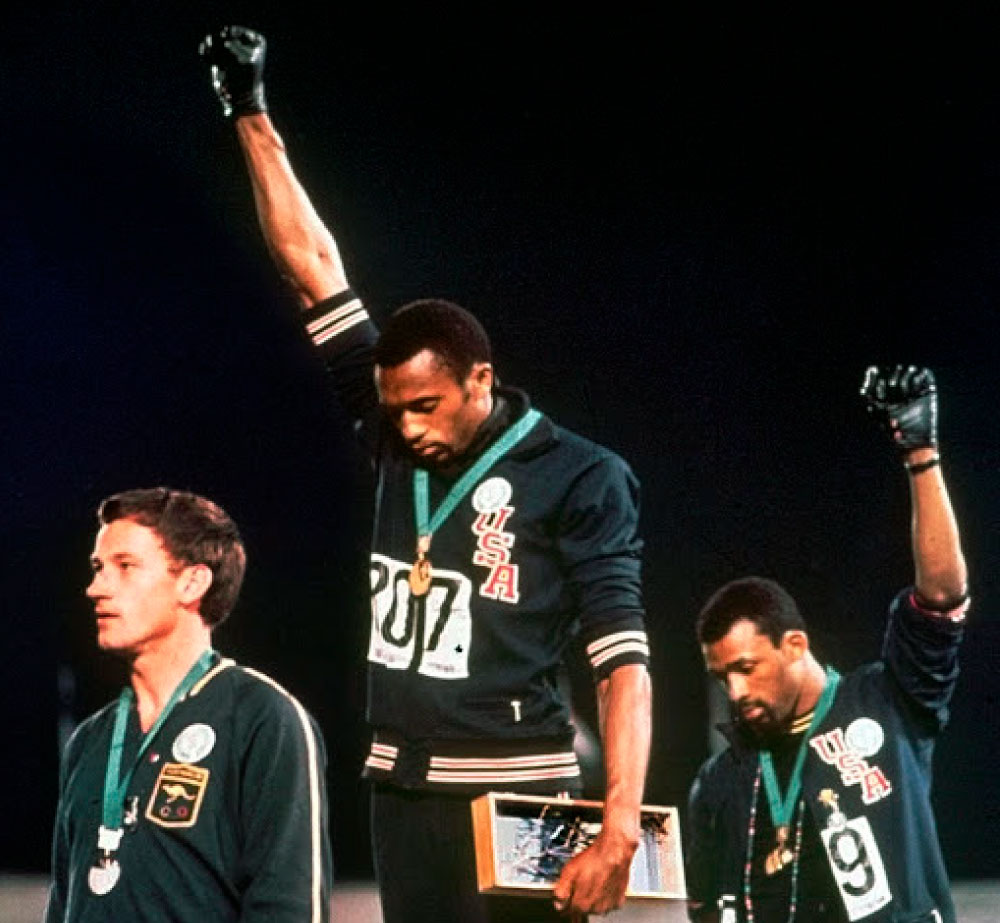
Last Friday was the 52nd anniversary of one of the most historic and controversial moments in the history of the Olympics. Most of us are familiar with story of Tommie Smith and John Carlos, who after finishing first and third in the 200-meter dash at the 1968 Mexico City Olympics, raised their black-gloved fists in protest during the playing of the U.S. national anthem. 1968 was a tumultuous year in America. Earlier in the year, Martin Luther King Jr. and Robert Kennedy were both murdered, and Smith and Carlos were determined to use their platform to bring global awareness about the plight of Black and poor people in America. Their image remains one of the most iconic in American history. Not surprisingly, Smith and Carlos were ostracized in the subsequent years; stripped of the medals, and vilified in the media. Their lives were threatened and their careers were destroyed.
However, very few know the story of Peter Norman. Norman was a talented but little-known sprinter from Australia who finished second in that same race and shared the podium with Smith and Carlos. Most people assumed that he was relatively unaware of the circumstances that surrounded him on that day. In fact, nothing could be further from the truth. Norman wore the same “Olympic Project for Human Rights” patch that Smith and Carlos wore on the podium, and it was Norman who suggested that they each wear a single black glove. When Norman returned to Australia, he refused to condemn Smith and Carlos. Australia had their own apartheid policies at the time, and Norman became an outcast in his own country.
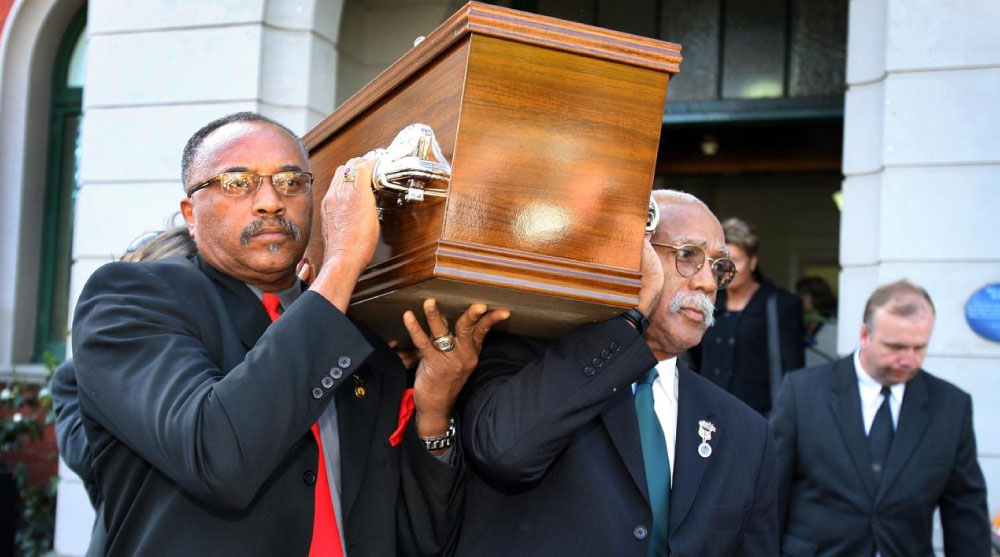
In 1972, Norman qualified again for the Olympic games in Munich, but was denied a place on the team by the Australian Olympic Committee. While Smith and Carlos eventually became the legendary figures they deserved to be, even attending the White House with the American Olympic team after the Rio Games two years ago at the invitation of then-president Barack Obama, Norman spent the rest of his life struggling personally and working odd jobs. In 2006, Norman died of a heart attack and Smith and Carlos were both pallbearers at his funeral. In 2012, the Australian Parliament issued a posthumous apology to Peter Norman for not allowing him to participate in the 1972 Olympics.
The fight for civil rights has had many unsung heroes and the story of Peter Norman is just one of them.






Regardless of political persuasion, most people think the rhetoric of politics has gotten out of control. If you believe that, as I do, there IS something you can do about it. You can ask yourself whether you are helping or hurting the situation. I like to say that there are two types of people in the world: people who add stress and people who relieve stress. I think similarly, some people are adding to the political spectacle in the country, and others are at least trying for something better.
Gary's Blog will return next week.
This past week, the National Association of Realtors invited me to participate in a meeting with the NAR leadership and Jonathan Kanter, the Assistant Attorney General of the United States.