
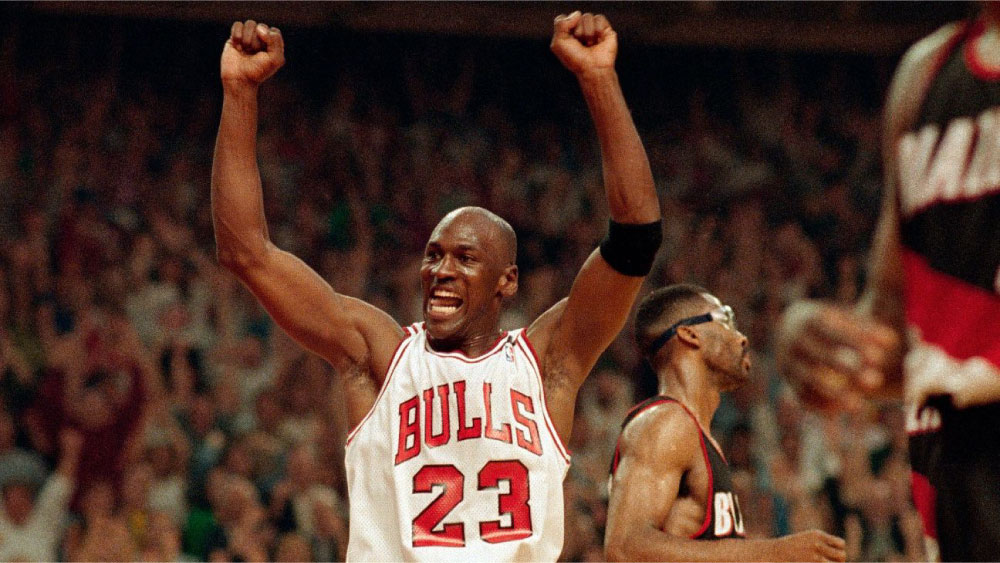
For those of us who are missing sports, The Last Dance, has become a weekly sanctuary. The ESPN 10-part documentary takes a deep dive into the career of basketball legend, Michael Jordan. Jordan is widely considered the greatest basketball player of all time, but the film is a lot more than a collage of basketball highlights, it provides a back-stage view of the mindset, and resilience that it takes to achieve the absolute pinnacle of any profession.
Jordan is a contemporary of mine and I observed his career in real time. As a Laker fan, I generally rooted against him except, of course, when he played against the Celtics, but his athletic virtuosity was like nothing I had ever seen. He was so talented, it was easy to assume that his championships and individual achievements came easy, and hard to relate to him. However, the best parts of The Last Dance, show the heartache, adversity and drama that Jordan and his Bulls had to overcome to win six NBA titles, and the complicated chemistry among players and coaches that is required to be successful in team sports. The NBA was different in the 80’s and 90’s. I was one of the many who believed that part of Jordan’s success was the era in which he played. He came when Magic and Bird were on the decline and before Kobe and Shaq hit their prime, but it was also when the league was at its most physical. Jordan loved to attack the basket and man; he took a beating. A foul that would likely earn a suspension today, was just an ordinary foul in the Jordan era. The documentary also shows that Jordan himself was not perfect. He had his own insecurities and demons to deal with.
The Last Dance is for sports fans, so I’m not going to try to convince someone who is not interested in basketball to watch it, but the themes and plot lines could apply to just about anything. Michael Jordan might be the most prodigious athlete of all time, but his physical talents guaranteed him nothing. It was his competitive spirit, toughness and his uncanny ability to overcome any challenge that made him who he was…one of the most successful American athletes of all time.






With the presidential election only three weeks away, partisans on both sides are taking off the gloves with rhetoric that vilifies their opponents and fires up their minions. Most people believe that our country is more divided than ever. Indeed, the days when liberal and conservative candidates can debate their views respectfully seem like a distant memory. At the risk of oversimplifying things too much, let me cut to the chase about what is driving the divisions in the country.
NAHREP shares data at conferences to build a more accurate narrative about the Latino community from an economic perspective. Sharing that data with attendees, influential business leaders, and media at the event helps achieve that goal while arming them with information that can give them a competitive advantage with their businesses.
The best businesses and the most successful people don't just perform a task and make money. They solve a problem or facilitate an opportunity. Uber, Tesla, Apple, Netflix, and Microsoft approached their business with that mindset. They were designed to solve humanity's most significant challenges and opportunities. However, even the smallest companies can develop solutions that people care about.