
Somebody once told me that you get power by giving power and you get respect by giving respect.
On election night, I posted a statement on Facebook that said Latino voters delivered Florida for Trump, and Arizona for Biden (I may have been premature on the latter). The post received 143 comments and included a rather heated debate about whether Cubans, who voted for Trump, are true Latinos. I was perturbed to see this because my post was intended to celebrate the significance of the Latino vote, which most of us know is not monolithic. For the record, Cuban-Americans, regardless of who they voted for, ARE Latinos and are some of the most patriotic people in the country.
While the factors that influence how people vote are complex, the Latino agenda, however that is defined, would benefit if Latinos as a collective group would learn to communicate about politics with each other a little better. I therefore feel compelled to address the issue more frequently than some prefer. I don’t mind if Latinos don’t vote as a block, in fact it is better that we don’t, but it could be something amazing if we could coalesce around some key issues that we all value, such as education, small business, legal immigration, and homeownership. In order to get there, I think we need to appreciate the drivers of our Latino political counterparts a little better.
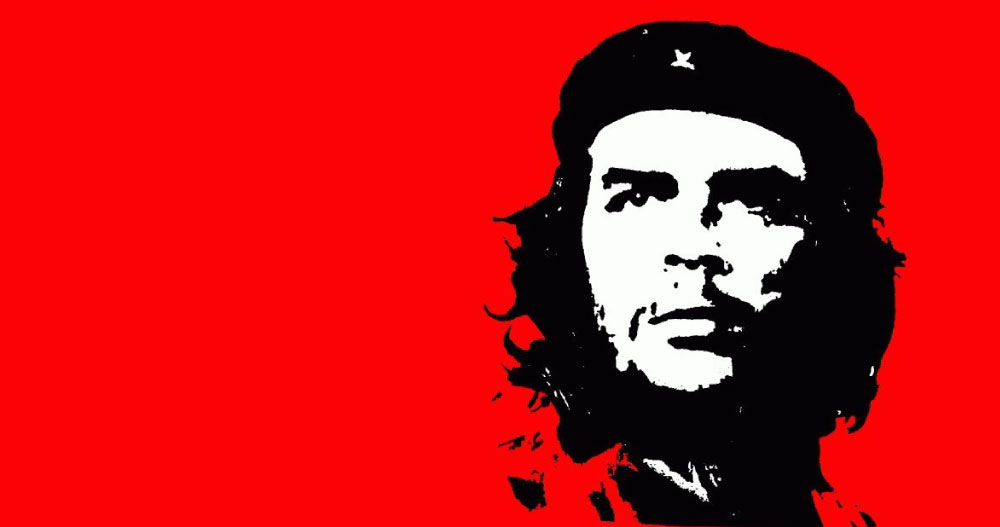
Years ago, I watched the movie The Motorcycle Diaries based on the memoirs of Ernesto “Che” Guevara. The movie portrayed Guevara as a sympathetic figure profoundly impacted by social injustice in Latin America. Guevara became one of the key revolutionary figures in Latin America. He was killed in battle in 1967. In the years following his death, Guevara became a cult-like figure and an icon of youthful rebellion. His image which is adorned on everything from t-shirts to tattoos has, in some circles, become as a recognizable as the Nike logo. I never was one to wear a Che Guevara t-shirt, but my impression of him because of the movie was generally positive. At least until my Cuban-American friend, Tino Diaz, educated me on a few things. He explained to me that Guevara, who was a Marxist/socialist, is known by Cuban exiles in America as “The Butcher of La Cabaña”. During the Fidel Castro-led Cuban revolution, he rose to become Castro’s number two, and according to Tino was responsible for hundreds of politically motivated executions. Tino himself had a relative killed by Guevara. Hearing this directly from a close friend not only impacted my opinion of Che Guevara, it gave me a deeper appreciation for the intensely personal experiences that influence the politics of my brothers and sisters of Cuban descent. Empathy is a powerful thing if you give it a chance. Latino Democrats can argue that the version of Guevara held by most Cuban exiles conflicts with other historical accounts of his life, and the man has been dead for 50 years; so, isn’t it time to move on? Perhaps, but it is also not difficult to understand why socialism is such a nasty word to Cuban-Americans and why many of them have a bias against the political party of Bill Clinton and John F. Kennedy that snatched Elián González from his relatives in Little Havana in 2000 and abandoned Cuban freedom fighters in the Bay of Pigs Invasion in 1961. We can disagree about politics, but you have to respect those feelings, and I can only imagine how hurtful it is when a Cuban-American sees a fellow Latino wearing a Che Guevara shirt.

When Donald Trump launched his first presidential campaign in 2015, he announced his candidacy with a speech that characterized Mexican immigrants as drug dealers, criminals and rapists. It was unprecedented and deeply offensive to Mexicans and other Latino-Americans. After Trump was elected, his administration followed through with a number of policies including the reversal of DACA, and a zero-tolerance policy at the southern border which has resulted in the inhumane separation of thousands of Latino families. These policies coupled with consistent anti-immigrant rhetoric has left most Latinos from Mexico and Latin America feeling angry and abused. Latino Republicans might argue the finer details of these points, just as Democrats might challenge the legacies of Guevara, Gonzalez, or the Bay of Pigs, but the bottom line is that to the millions of Latinos who have been directly or indirectly impacted by these policies, Donald Trump represents the brutal treatment of our people. Again, you don’t have to agree with the politics, but you should respect those feelings. A Latino in a MAGA hat is just as offensive to some as a Che Guevara shirt is to others.
As the head of one of the largest Latino business organizations, my job isn’t to get everyone into the same political camp, it’s to get us to rally around a handful of key issues and parlay our diversity into strengths. Republicans and Democrats both know that a Latino electorate that is in play to both parties can be a major driver of public policy. However, there isn’t a politician alive who can help advance our collective interests if we aren’t willing to do the heaving lifting on our own – and that starts by a little more unity and a little less sniping. If we want respect, we need to start by respecting each other.






With the presidential election only three weeks away, partisans on both sides are taking off the gloves with rhetoric that vilifies their opponents and fires up their minions. Most people believe that our country is more divided than ever. Indeed, the days when liberal and conservative candidates can debate their views respectfully seem like a distant memory. At the risk of oversimplifying things too much, let me cut to the chase about what is driving the divisions in the country.
NAHREP shares data at conferences to build a more accurate narrative about the Latino community from an economic perspective. Sharing that data with attendees, influential business leaders, and media at the event helps achieve that goal while arming them with information that can give them a competitive advantage with their businesses.
The best businesses and the most successful people don't just perform a task and make money. They solve a problem or facilitate an opportunity. Uber, Tesla, Apple, Netflix, and Microsoft approached their business with that mindset. They were designed to solve humanity's most significant challenges and opportunities. However, even the smallest companies can develop solutions that people care about.