
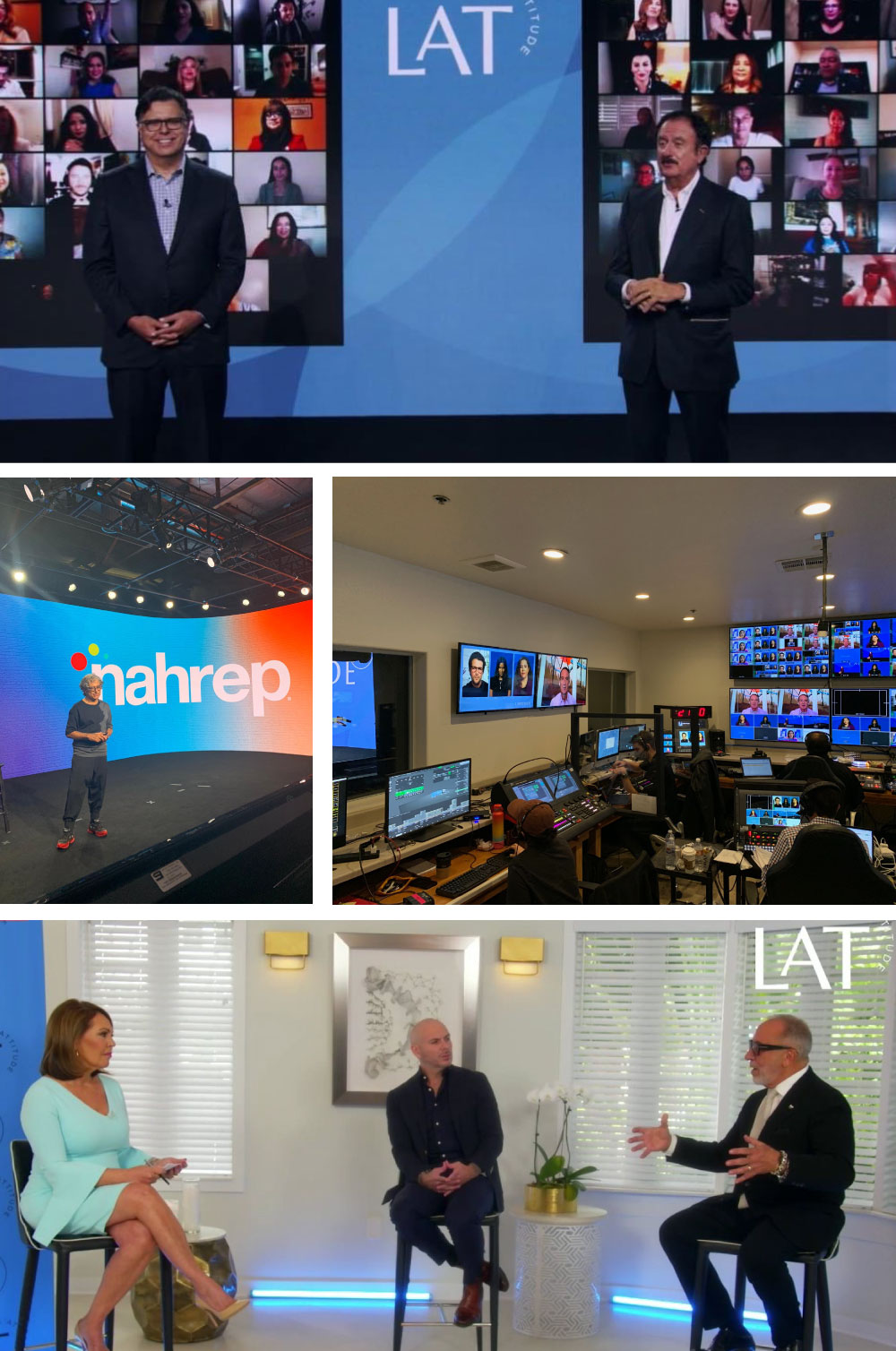
In the months prior to L’ATTITUDE 2020, I made it a point to watch a number of virtual events. Some like the Aspen Ideas Festival were well executed, but aimed relatively low in terms of program and production. The major events such as SXSW and Comic-Con offered smaller virtual versions of their massive live events that were free of charge to the public, while very few that I saw produced anything memorable. The UnidosUS conference suffered a technical breakdown on their first day, leaving would-be attendees with dead air for a significant period of time. I think most event organizers believed that people were “zoomed-out” and there wouldn’t be much of an audience for the typical conference panel session streamed on the internet featuring speakers who were broadcasting from their bedrooms, so they didn’t put a whole lot of effort into their events. They just wanted to live to fight another day.
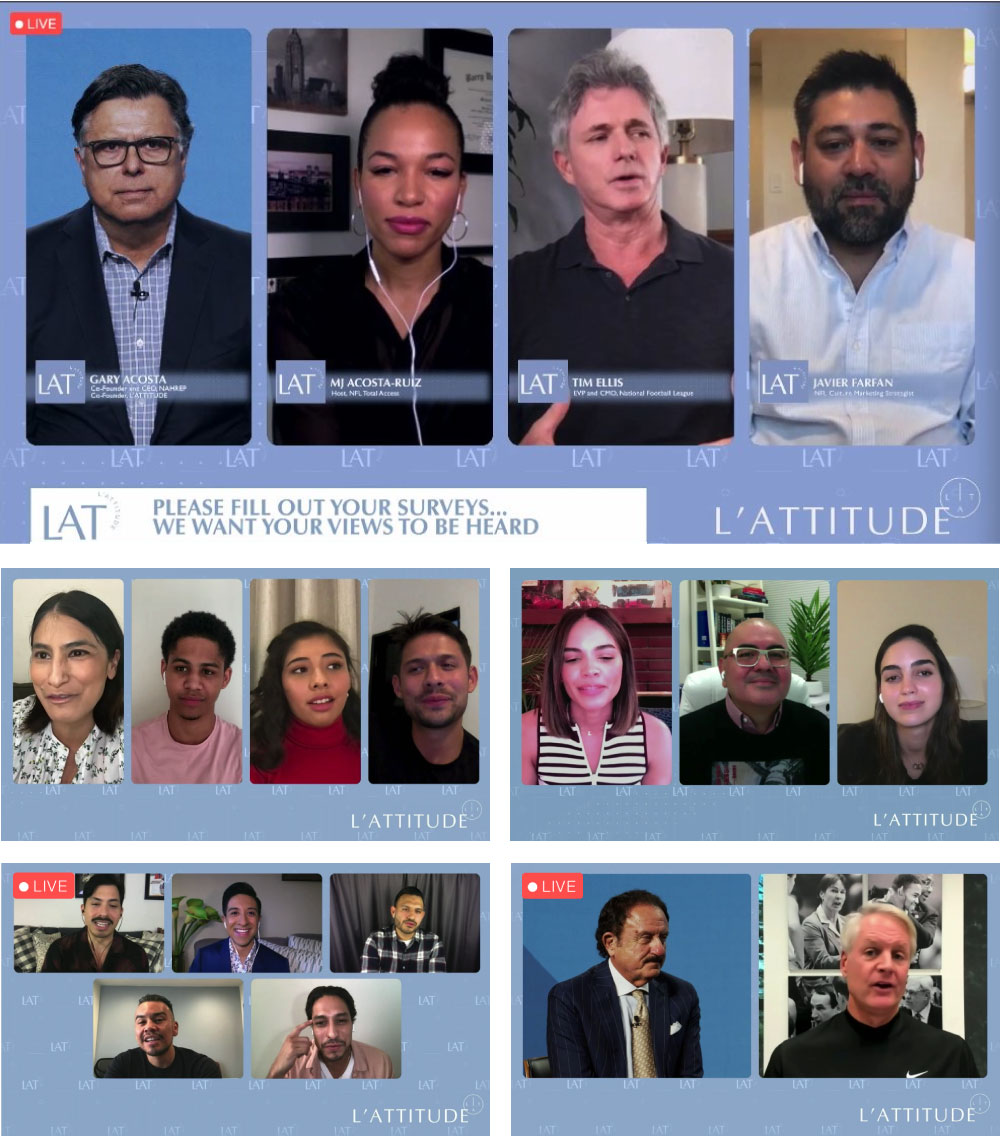
This was not the case for L’ATTITUDE 2020. Rather than take the easy way out, we aimed to produce THE event of the year, and in retrospect, we may have accomplished exactly that. However, I must admit I was terrified in the days leading up to showtime. With NAHREP, L’ATTITUDE 2020 planned to broadcast two major conferences – simultaneously. Altogether we had more than 50 fully produced sessions, with in-excess of 200 speakers, a dozen Fortune 500 CEOs, and a cadre of A-list celebrities including Jessica Alba, Pitbull, Selena Gomez, Camila Cabello, Eva Longoria, Canelo Álvarez, Gloria Estefan and Chef José Andrés. To further complicate matters, ninety minutes of the event was scheduled to be broadcasted live on MSNBC. There were about a million things that could go wrong. The morning of the first day of the event, at 4 AM, I told my wife, “I’m sure glad I have you, because by tonight I may not have much else”.
On the technical side, our team of Omar Tejeda, Marc Spina, Katherine Wood, Marisa Calderon, Bill Obermeier, Anthony Bollotta, and Andrea Trujillo spent months working with multiple vendors building a HUB where the event could be viewed. However, after the UnidosUS catastrophe, we took the added precaution of setting up a backup platform in the event there were any technical problems. Sure enough, after weeks of testing, the platform we purchased broke down the morning of the event, and thirty minutes before our first session, we moved to plan B. To the outside viewer, it was seamless, but to rest of us, it was a disaster averted. Over the next four days, there were other crashes and small fires, but to the L’ATTITUDE audience, it looked like we had been producing events like this for years.
With the exception of Jerry Ascencio, Sara Rodriguez, and Armando Tam, who bravely traveled to our studio in San Diego, I missed seeing my friends in person this year. But by going virtual, L’ATTITUDE 2020 reached a larger audience and introduced our platform to some of the most powerful people in the business, political and entertainment worlds to a new narrative about what the Latino community represents to our country, our economy and our quality of life. Moving forward, I think our experience in 2020 will make us better at producing this all-important event. We are on the verge of something truly special.
The thing about L’ATTITUDE that makes me the proudest is how it continues to surprise people by its quality and audacity. We aren’t trying to build the best Latino event in America, we are trying to build the best event platform in America, period. A few days after the event, one of the top executives who spoke was amazed by the size and complexity of the event. He said to Sol Trujillo, “I can’t believe you guys pulled this off” and Sol responded by saying “of course we did, we’re Latinos.” I love that.






Regardless of political persuasion, most people think the rhetoric of politics has gotten out of control. If you believe that, as I do, there IS something you can do about it. You can ask yourself whether you are helping or hurting the situation. I like to say that there are two types of people in the world: people who add stress and people who relieve stress. I think similarly, some people are adding to the political spectacle in the country, and others are at least trying for something better.
Gary's Blog will return next week.
This past week, the National Association of Realtors invited me to participate in a meeting with the NAR leadership and Jonathan Kanter, the Assistant Attorney General of the United States.