
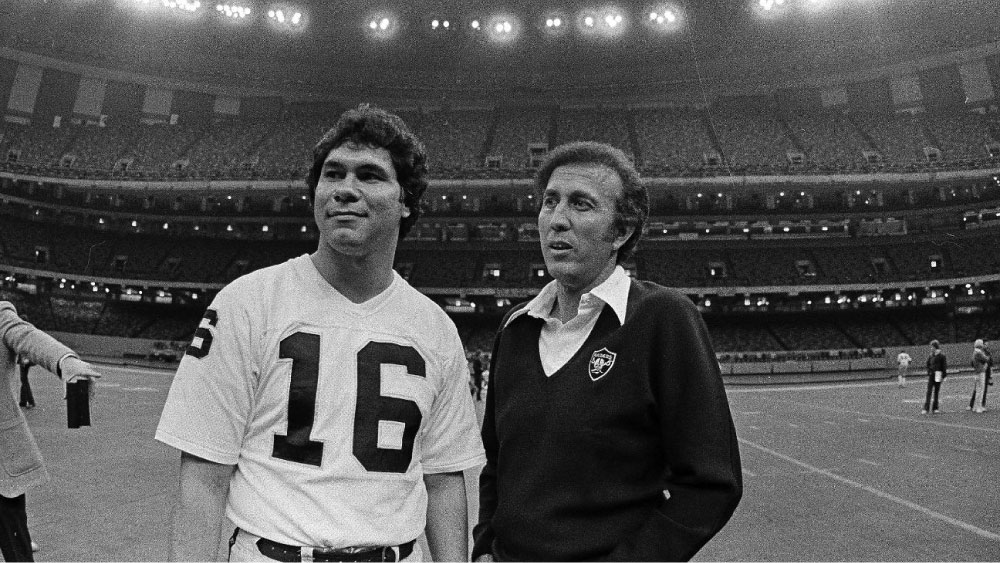
Tom Flores was elected to the Pro Football Hall of Fame this past week. He is the first Hispanic quarterback in pro football and the first Hispanic head coach of an NFL franchise. His election to the Hall of Fame was celebrated by Latino organizations such as LULAC and the US Hispanic Chamber of Commerce. While Flores, whose father immigrated to the U.S. as part of the Bracero guest worker program, advocated for Latino immigrants later in his life, was not known for being a vocal proponent of Latino causes when he was at the peak of his fame. For this reason, I personally know a few Latinos who are not celebrating Tom Flores’ history-making recognition.
How do I feel about Latinos who only show up when it’s convenient or when there is something personal to gain? Well, I don’t know Tom Flores, but this is a scenario I have thought about more than a few times. I remember during the last recession, the only real estate agents who were surviving were the ones who had foreclosure listing accounts (REO). These listing accounts came from federal agencies and major financial institutions. They were very difficult to get and usually went to a select group of agents who had long-standing relationships with these institutions, and even though most of the foreclosures were occurring in Black and Hispanic neighborhoods, very few agents of color had these relationships. NAHREP leaders met with FHA, Fannie Mae, Freddie Mac, and every major bank and servicer in America arguing that Latino agents needed to have their fair share of listing and other business opportunities. It was a tough battle and we got a lot of doors slammed in our face. I could write a book about the humiliation and abject racism I encountered during that time. Without question, NAHREP was the reason many Latino agents survived during that time, and a few became millionaires because of the work we did. Between 2008-2012, NAHREP brought dozens of asset managers and loan servicers to our events, and I personally saw hundreds of Latino agents who had never attended a NAHREP event before the housing crisis put on a NAHREP pin and charge to the front of the line.
I decided then, and still believe today, I would welcome any Latino who wanted back into the family regardless of their motive. It is hard enough getting our people under one tent, I don’t have the time or the inclination to speculate why. My hope, of course, is that once they are under the tent, the “Johnny-come-lately” Latinos will stay there, and give back to our Latino community from that point forward – even though I know this won’t always be the case. There are hundreds of Latino real estate agents who never came back to NAHREP once there weren’t any more REO listings to snag, but there have also been many others who have remained connected including some who became some of our best and most ardent members.
We all know who among us are real and who are the pretenders, and make no mistake, I don’t think all Latinos deserve the same things when there are actual opportunities being passed around. However, I also think loyalty tests won’t help us in the long run. We will lose a lot of good people if we go down that path. Most of us eventually figure out who we are. Some of us just take a little longer. I’m willing to give any Latino who wants back onto the reservation the benefit of the doubt…at least until they prove me wrong.






With the presidential election only three weeks away, partisans on both sides are taking off the gloves with rhetoric that vilifies their opponents and fires up their minions. Most people believe that our country is more divided than ever. Indeed, the days when liberal and conservative candidates can debate their views respectfully seem like a distant memory. At the risk of oversimplifying things too much, let me cut to the chase about what is driving the divisions in the country.
NAHREP shares data at conferences to build a more accurate narrative about the Latino community from an economic perspective. Sharing that data with attendees, influential business leaders, and media at the event helps achieve that goal while arming them with information that can give them a competitive advantage with their businesses.
The best businesses and the most successful people don't just perform a task and make money. They solve a problem or facilitate an opportunity. Uber, Tesla, Apple, Netflix, and Microsoft approached their business with that mindset. They were designed to solve humanity's most significant challenges and opportunities. However, even the smallest companies can develop solutions that people care about.