
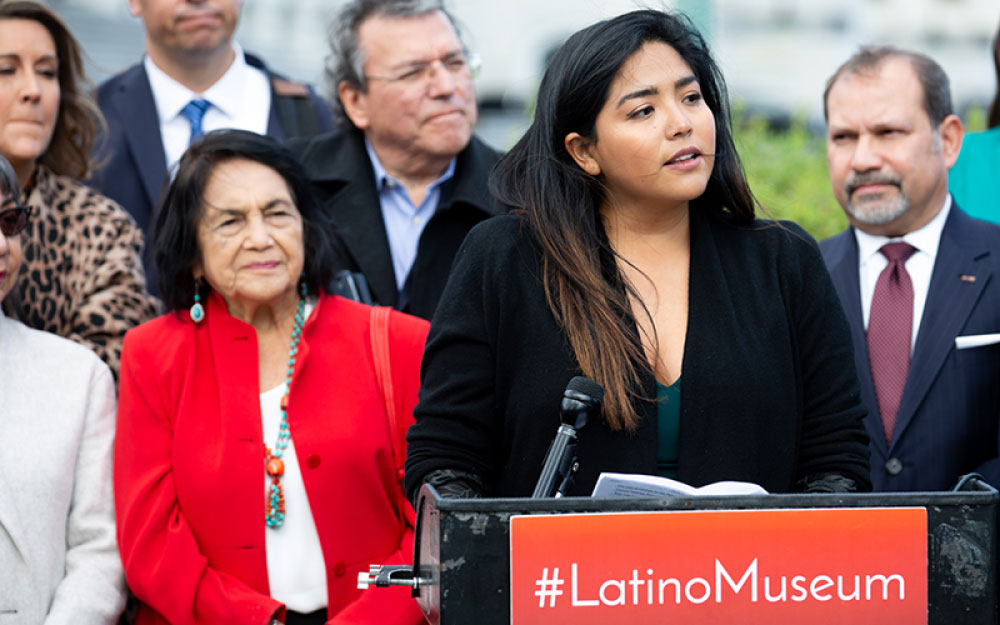
I had a great conversation this week with Congressman Tony Cárdenas. Tony is from Los Angeles and a former REALTOR®. In fact, he started his career in real estate with Jerry Ascencio, NAHREP’s former national president. Tony recently announced his candidacy for the position of Assistant Speaker of the House, but prior to that he was one of the members of Congress who was driving the passage of a bill to establish a Smithsonian Latino museum. The bill was passed in July by the House of Representatives and was unanimously, yes unanimously, approved by the House. There is still a relatively long road ahead to get to the point of breaking ground. It has to also pass in the Senate and be signed by the President; but the massive bipartisan support in the House is a good sign that it will get done.
After a law is established, the funding needs to be approved, and half of the money needed to endow the museum must come from private donations, which could also take some time. Frankly, and I hesitate saying this publicly, I hope Latino business leaders step up in terms of fundraising for the museum. Writing checks for something other than family is a discipline we haven’t quite mastered yet.
Congressman Cárdenas and I both agree that a national museum which recognizes and celebrates the contributions made by Latinos to build, defend and enrich our nation is long overdue. Storytelling is the most effective way to educate, and the stories that can be curated and shared with the world by virtue of this museum can help create a new narrative about Latinos in this country. I am excited to see it all come together and hope we all do our part to make it a reality.






Regardless of political persuasion, most people think the rhetoric of politics has gotten out of control. If you believe that, as I do, there IS something you can do about it. You can ask yourself whether you are helping or hurting the situation. I like to say that there are two types of people in the world: people who add stress and people who relieve stress. I think similarly, some people are adding to the political spectacle in the country, and others are at least trying for something better.
Gary's Blog will return next week.
This past week, the National Association of Realtors invited me to participate in a meeting with the NAR leadership and Jonathan Kanter, the Assistant Attorney General of the United States.