
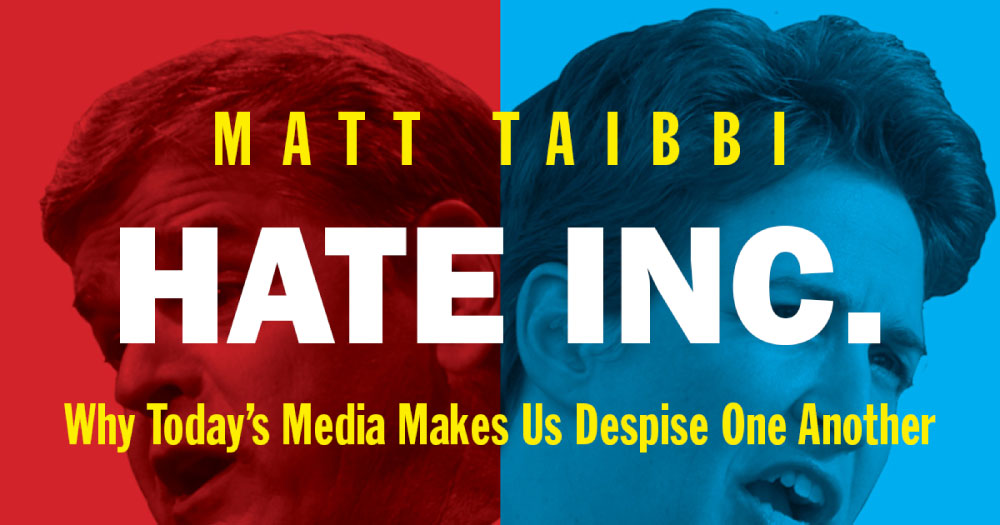
Coming off all of the crazy comments I received over last week’s blog on Goya, I started reading a book titled, Hate, Inc.: Why Today’s Media Makes Us Despise One Another. It’s written by Matt Taibbi, a Rolling Stone journalist who says that the press has mastered the art of monetizing anger, paranoia and distrust. Chapter 2 is titled, The Ten Rules of Hate. If you read nothing else, you should read that chapter. It smartly explains how we have been manipulated into believing that everything is either red or blue, and why the media not only wants us in a perpetual state of disagreement, it wants us to hate one another. The book helped me to write my first podcast which I call Closing the Political Divide. On Monday, I will be interviewed on a live webinar to an invited audience of NAHREP leaders discussing my Goya blog and my personal vision for the Latino community as it relates to politics. I am told we already have more than 200 people registered for the event. I’ll be writing about it next week.






Regardless of political persuasion, most people think the rhetoric of politics has gotten out of control. If you believe that, as I do, there IS something you can do about it. You can ask yourself whether you are helping or hurting the situation. I like to say that there are two types of people in the world: people who add stress and people who relieve stress. I think similarly, some people are adding to the political spectacle in the country, and others are at least trying for something better.
Gary's Blog will return next week.
This past week, the National Association of Realtors invited me to participate in a meeting with the NAR leadership and Jonathan Kanter, the Assistant Attorney General of the United States.