
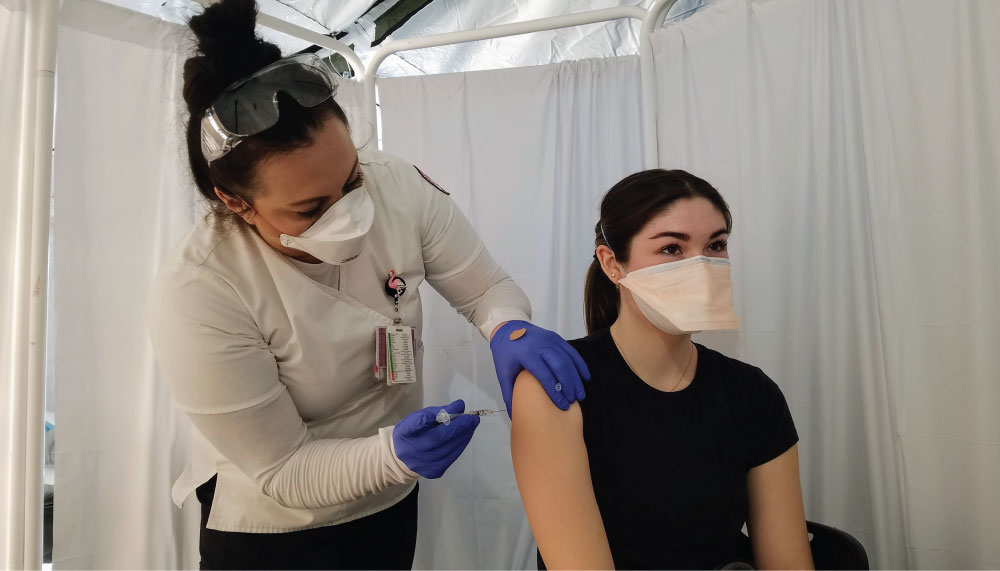
California has trailed much of the country in COVID-19 vaccine distribution, but last week, thanks to my friend Jason Madiedo, my wife, son and I all received our first dose of the Pfizer vaccine in Las Vegas. We were driving from Colorado Springs to San Diego and stopped in Las Vegas to get vaccinated. It was a big set-up at the Las Vegas Convention Center. FEMA and the National Guard were present. The experience was impressive and comforting. We were in and out in 30 minutes and fortunately none of us had any side effects. We all had COVID in January and now that we are in the middle of completing the vaccination process, I’m feeling pretty safe. Governor Newsom says that all adults in California will be able to get vaccinated by mid-April, and many other states have set similar dates. While the vaccines are not 100% effective, they seem to be close to 100% in preventing serious illness. In other words, none of the handful of vaccinated people who have acquired the virus have required hospitalization or have died. The vaccines also appear to be effective against the variant strains – at least thus far.
If these data points hold true, the vaccines for COVID-19 will be among the most effective in the history of vaccines – and if enough people choose to get vaccinated, we could achieve herd immunity in the United States by mid-May or early June. Of course, we all hope it turns out this way. I also know that a lot of people have had concerns about the safety of the vaccines. No vaccine in history has ever been completed and approved in shorter time, and the internet is full of crazy stories, but the vaccines have been distributed in the four corners of the globe, and there have been very few reasons for concern. Some people worry about the long-term effects of the vaccine. To that I can only say vaccines have been around for a long time and while there have been many side effects, they always have surfaced in the near-term and there has never been a credible story about any long-term effects. It recently was revealed that Donald and Melania Trump received their vaccines in January, and were among the first in the country to receive it. I can only speculate why he chose to keep it a secret, but he recently confirmed that he is indeed vaccinated. Receiving the COVID-19 vaccination is not a political statement, it’s a personal health decision that should have nothing to do with politics. The choice is yours, but the fact is if we can’t get 80% of our population to get vaccinated, we may be living with this virus for a lot longer than we hoped.






With the presidential election only three weeks away, partisans on both sides are taking off the gloves with rhetoric that vilifies their opponents and fires up their minions. Most people believe that our country is more divided than ever. Indeed, the days when liberal and conservative candidates can debate their views respectfully seem like a distant memory. At the risk of oversimplifying things too much, let me cut to the chase about what is driving the divisions in the country.
NAHREP shares data at conferences to build a more accurate narrative about the Latino community from an economic perspective. Sharing that data with attendees, influential business leaders, and media at the event helps achieve that goal while arming them with information that can give them a competitive advantage with their businesses.
The best businesses and the most successful people don't just perform a task and make money. They solve a problem or facilitate an opportunity. Uber, Tesla, Apple, Netflix, and Microsoft approached their business with that mindset. They were designed to solve humanity's most significant challenges and opportunities. However, even the smallest companies can develop solutions that people care about.