
Click on the red play button to listen to the audio version.
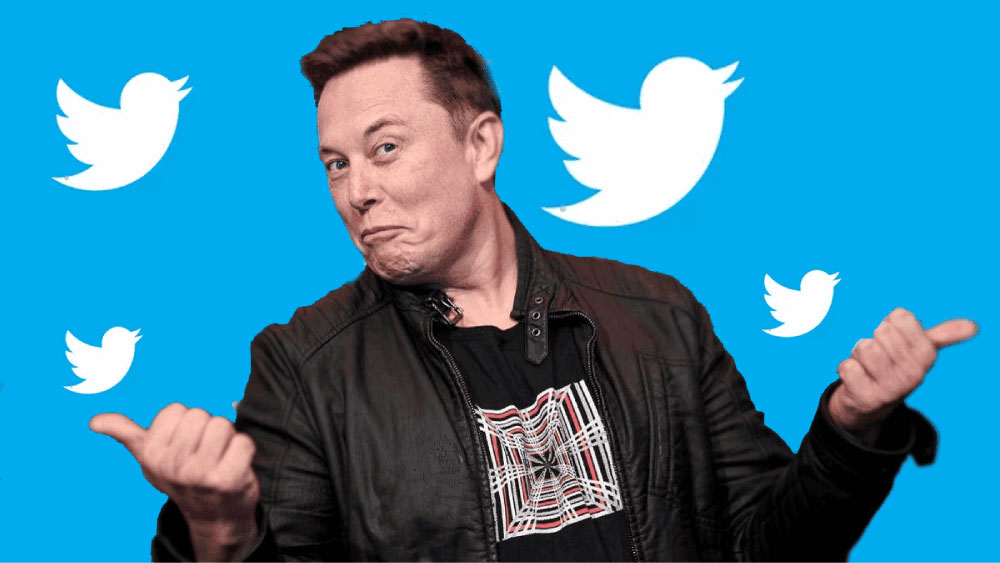
How would you like it if the person sitting next to your child on an airplane is openly watching pornography on their iPad? What if a co-worker posted on a company group chat that you once molested a kid? What if banks, targeting the elderly, promised 1000% returns on an investment. In a completely free society, these things would be permissible, yet I doubt most people want America to be THAT free. This past week, Elon Musk made an unsolicited offer to purchase Twitter for $43B. He said that he wanted to turn it into a global platform for free speech. This sent the internet buzzing for days. Let’s be honest, most people celebrating Musk’s takeover bid were hoping that his first order of business as the new owner would be to restore Donald Trump’s user privileges. Personally, regardless of what I think of Musk or Trump, I don’t like the idea of one person, any person, controlling everything we see on Twitter. Mark Zuckerberg has already proven how damaging that could be. Not to be outdone, Musk purchasing Twitter would most likely lead to Jeff Bezos purchasing a platform like Snapchat. He already owns the Washington Post. After the Twitter takeover announcement, I posted on Facebook the question “Elon Musk wants to buy Twitter. I like Musk, but do you believe that 3-4 White guys controlling everything on social media lead to free speech?” I had no idea how many of my social media friends believe they are experts on constitutional law – LOL. I also never knew how many of my Hispanic friends are perfectly fine living under an all-White oligarchy – that’s a separate issue. Politics makes people crazy these days, and even though my question on Facebook was about the risks of consolidated power in social media, the inevitable references to Communists and Nazis became so charged, that I had to block a couple of followers. It also made it clear that very few people understand the meaning of free speech or the application and limitations of the first amendment.
The first amendment limits the government’s ability to suppress free speech. Most people, including me, love that part of America. However, I hope I have demonstrated above that free speech is not absolute. Additionally, free speech as referenced in the constitution doesn’t apply to individuals or private companies. For example, any company can establish a policy that prohibits the use of profanity when communicating with co-workers or customers, and a company like Twitter can legally establish standards for users on their platform. Donald Trump didn’t create Truth Social for the sake of free speech, he created it to have a platform where he can establish his own rules for users, which ironically is another form of freedom. There are even occasions when the government CAN limit free speech, which is how libel, perjury, and defamation laws can exist or why you can be arrested for reckless endangerment for yelling “fire” in a crowded theater. There is a name for unrestrained free speech, it’s called anarchy and it doesn’t exist anywhere in the world. So, if you agree that there are and should be limits to free speech, the question remains where to draw the line. I wrote a blog a couple of years ago, titled “The silent majority in the middle”. In it, I explained how even though the only voices we tend to hear from the media are the voices on the extremes of both sides, the majority of Americans are somewhere in the middle, politically. So instead of calling each other Communists and Nazis, we need to have an intelligent conversation on what are the appropriate rules for social media, and we need our elected officials to do the same. Like most people, I’m not sure at which point putting some safety controls on free speech becomes censorship, but I’m fairly certain putting all the decision-making authority in the hands of only three or four men is not what is going to get us there.






Regardless of political persuasion, most people think the rhetoric of politics has gotten out of control. If you believe that, as I do, there IS something you can do about it. You can ask yourself whether you are helping or hurting the situation. I like to say that there are two types of people in the world: people who add stress and people who relieve stress. I think similarly, some people are adding to the political spectacle in the country, and others are at least trying for something better.
Gary's Blog will return next week.
This past week, the National Association of Realtors invited me to participate in a meeting with the NAR leadership and Jonathan Kanter, the Assistant Attorney General of the United States.